


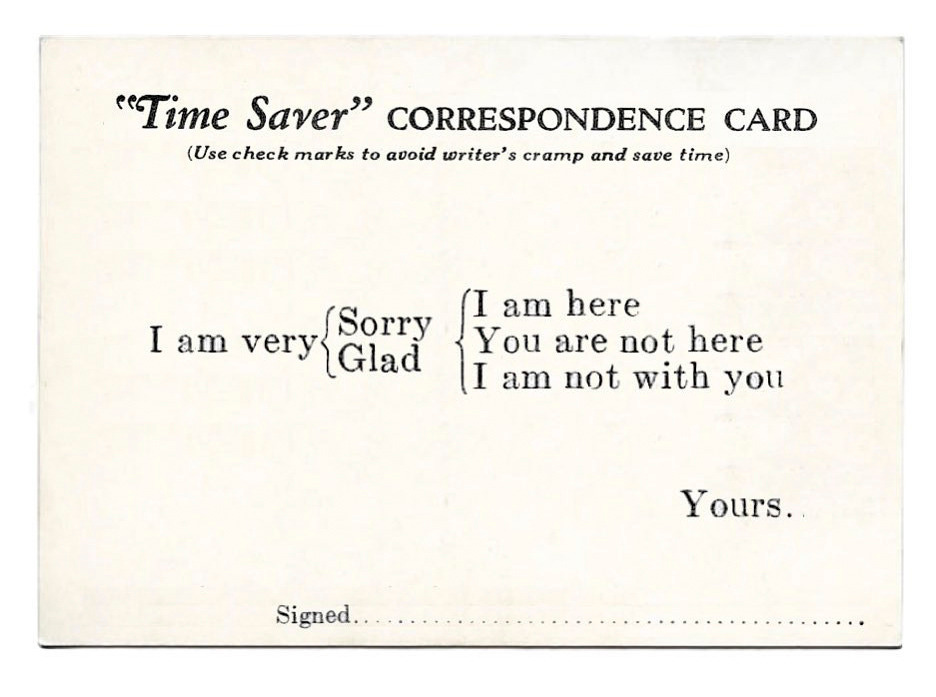
1
Growing up, I’d make my parents say sorry to each other whenever they were fighting.
Then I’d check to confirm they’d done it.
“Did you say sorry?” I’d ask.
“Yes.”
“Did Dad say sorry?”
“Yes.”
“Are you guys still fighting?”
Sometimes they’d tell me the truth - “yes, we are.” Other times they’d lie. I wonder how all of that must have been for them. Did my blunt negotiation tactics help?
I’m not sure if my blunt negotiator schtick actually helped, but I needed to do it. Like a compulsion. Like picking at a scab. My biggest fear was that they’d get divorced and this was the only way to make sure it didn’t happen. Well, that and also asking them about it all the time.
“Are you going to get divorced?”
“No,” they’d always say.
“Really?” I’d ask.
“Yes.”
I’d also ask them if they were happy, which was a test. If they replied with “happy happy,” I knew they were actually happy. But if they replied with just “yes” or “happy,” I knew they were lying.
2
There’s this online essay from way back called ‘things you’re allowed to do.’
It’s full of things like “Say ‘I don’t know’” and “buy goods/services from your friends.”
The list is so powerful because the ideas are obvious, yet we forget we can, in fact, just do them.
Anyway, I started writing my own list the other day.
a list of things you’re allowed to do
take a nap
power through and not take a nap
power through and not take a nap but then realize you do, in fact, need to take a nap
tell someone you’re sorry
That was as far as I got before, you guessed it, taking a nap. Waking up, I had no recollection of writing that last part. Who did I need to say sorry to? I say sorry all the time.
Sorry.
3
What does it even mean to say sorry? What is required? First, you gotta have something to say sorry for.
Maybe, but not always. Wilder, my 5yo, says sorry all the time but it doesn’t really mean “please forgive me for the wrong I’ve done.” More so he knows we’re upset and that a sorry might help. Or he’s annoyed and the sorry is “okaaaay, I’m sorry, stop bugging me.”
He speedruns it all too, like right after hitting his sister he’ll say “sorry” so that, when we’re explaining why he shouldn’t do that, he’s already deep into the “I said sorry!” alibi.
Saying sorry does always mean believing you’re worthy of forgiveness. Not that Wilder would have any idea of that being true, but he doesn’t need to. It’s a given. Assumed true until proven otherwise.
Or sometimes he’ll just say “okay” when I tell him not to do something.
“Stop saying okay,” I’ll say.
“Okay.”
4
The closest thing I have to a place of worship is the YMCA sauna. There, amongst my brothers in sweat, in the middle of a conversation about making amends with the people in your life, someone asked, “but how do you forgive people who don’t think they’ve done anything wrong?”
An older man with a scraggly face and a resting scowl, perched up in the far corner of the heat-box, said, “my father was a real son of a bitch. Only once he was gone could I really forgive him. So either you wait, or you do it now.”
I was the one who asked the question, by the way.
Lately I’ve felt the need to forgive my parents. Like whatever gunk and scar tissue there exists between us would all be erased if only I could forgive them.
But how could I do that if they don’t believe they’ve done anything wrong?
The first ten years of therapy is spent arriving at this point. That your parents are incredible, that they did the best they could, and that there might have been things you needed that you didn’t really get in the exact way you needed them. Even writing that out scares me. Because I don’t want my parents to think that they did anything wrong. They didn’t. And yet, here I am.
My parents didn’t make it easy. One time, during a fight, they said and very much meant: “we are perfect parents.” But maybe it actually made it easier, because it’s so obviously not true. No one is perfect. - and yet it also is, because maybe that perfection includes the ability to be wrong. Maybe the whole thing is a loss in immigrant translation.
5
On the other side of saying sorry, there’s forgiveness. The scratch and the itch.
I wonder if forgiving others is just the scenic route toward forgiving yourself.
I can’t just say sorry to myself.
Except wait - look at the list. I can say sorry. Let’s try:
Alex, I’m sorry.
(no response back)
Do you forgive me?
…for what?
I don’t know.
How can I forgive you if I don’t know what I’m forgiving you for?
Even if I accepted your forgiveness, would I buy it? Would it mean anything? Or is this one of those fake-it-till-you-make-it situations - forgive until you believe?
Forgiveness is the antidote to self-hate.
And doctor, I need the cure. I’m so full of it that I forget it’s even a thing. That there’s any other way to be. The scab exists so you can pick it.
But looking at my kids, I know there is another way. They do not hate themselves, which gives me hope that I could not hate myself too. And sometimes I don’t. Sometimes I forget about myself entirely. But
6
Wilder has said sorry for real, though. Like the other morning, when he woke up after a particularly hard night of fighting about no more TV. He walked up to me, we did our huggy, and he said “sorry.” And I said, oh, thanks for saying that, it’s okay, I really appreciate it.
“Okay,” he said. “You weren’t good either.” Or really what he said was: “you weren’t a good dada either.”
“What?” I said.
He said, no, remember? You said sorry about how you weren’t being a good dada.
And I remembered. I had apologized to him the other day for getting too upset, for not letting things go. And also to show him that I have faults, that I’m fallible, that I’m nowhere near perfect. I probably say sorry too much, to model it, and also because I am. We all say sorry to each other more. How could we not?
But hearing him say it still hurt. Still stung. And it’s okay that it hurt. The hurt is good because the hurt is real, and the hurt reminds me that it’s true: I’m not perfect, but I can own it.
7
The thought of forgiving my parents makes me want to throw up. Because it means admitting there’s something to forgive them for, which means admitting they weren’t perfect, which means admitting they weren’t correct. And that they weren’t the gods I once thought them to be.
This becomes easier when I realize that I’m not a god either - even if Wilder might see me as one. No one is. But we need them nonetheless: our parents, our leaders, our gods themselves. For in them there is safety. And in that safety, there is freedom. And in that freedom, we can be little idiots, goofing around. Asking our parents if they’re fighting, or if they’re going to get a divorce, or if they’re happy.
There’s something here that I’m almost able to touch. But not yet.
Maybe you don’t ever really touch it. Maybe you accept that you can and can’t touch it all at once. That your parents aren’t perfect, and thus they are. That you can forgive them nothing unless you forgive them everything, because nothing is everything. If nothing is true, then anything can be.
And really, neither matters. What matters is accepting how you feel and forgiving yourself. Forgiving yourself. Letting yourself off the hook. Because just like my parents refuse to accept that anything could be wrong, I refuse to accept that anything can be right. They say: we are perfect parents. I say: I’m a perfect piece of shit. We live in absolutes, because the nuance of truth is too scary. Too hard. Too messy.
You are not perfect. And I’m not a piece of shit. And somehow all of that is perfect. It has to be. Because it is.
And the truth is that it’s fine. It’s okay. We can own it, and we live in it, because we already do.
You can just do that. You’re allowed to just do that.
I’m doing it now. I’m trying it now. And I can.
Okay?
Okay.
And I guess what I’d really want to say to them is: I’m sorry.
I’m sorry for holding back, for holding grudges, for wishing things were different than they could possibly be. I’m sorry for being so angry. I’m sorry for wanting the impossible. I’m sorry for how that hurt you. I’m also sorry for how it hurt me.
I’m sorry, but I don’t wish it were any different. And I don’t take any of it back, because I don’t think we could possibly get here, where we are right now, without it.
And for that I am grateful.
And for that I am happy-happy.
And I hope you are too.
It becomes easier to forgive our parents if we become parents ourselves. We realize then that there are no perfect parents. Most of us do the best we can. I deliberately did some things differently with my kids than my parents did with me, but of course I made my own mistakes. The important thing is that kids know they're loved. I never told my parents about the things I really needed from them and didn't get. Since you can't go back and change anything, I saw no point in hurting them that way. I could forgive them in my heart without letting them know there was anything to forgive. It's good to understand how your upbringing shaped you, but then you move on.
When my younger son was two we attended a family wedding. Half an hour before showtime it was my responsibility to see that he was dressed in his finery for the ceremony. Only a tremendous row broke out over his preference to wear a goofy tee shirt instead of the no doubt uncomfortable collared shirt we’d picked out for him! Tears, shouting, more tears! And he attended the wedding and nobody gave it a second thought that the two-year old was in a goofy tee. Of course he was! I still regret my loss of control, and my son (now 35) swears he doesn’t remember any of it. But I do! Pop malpractice!